seolounge
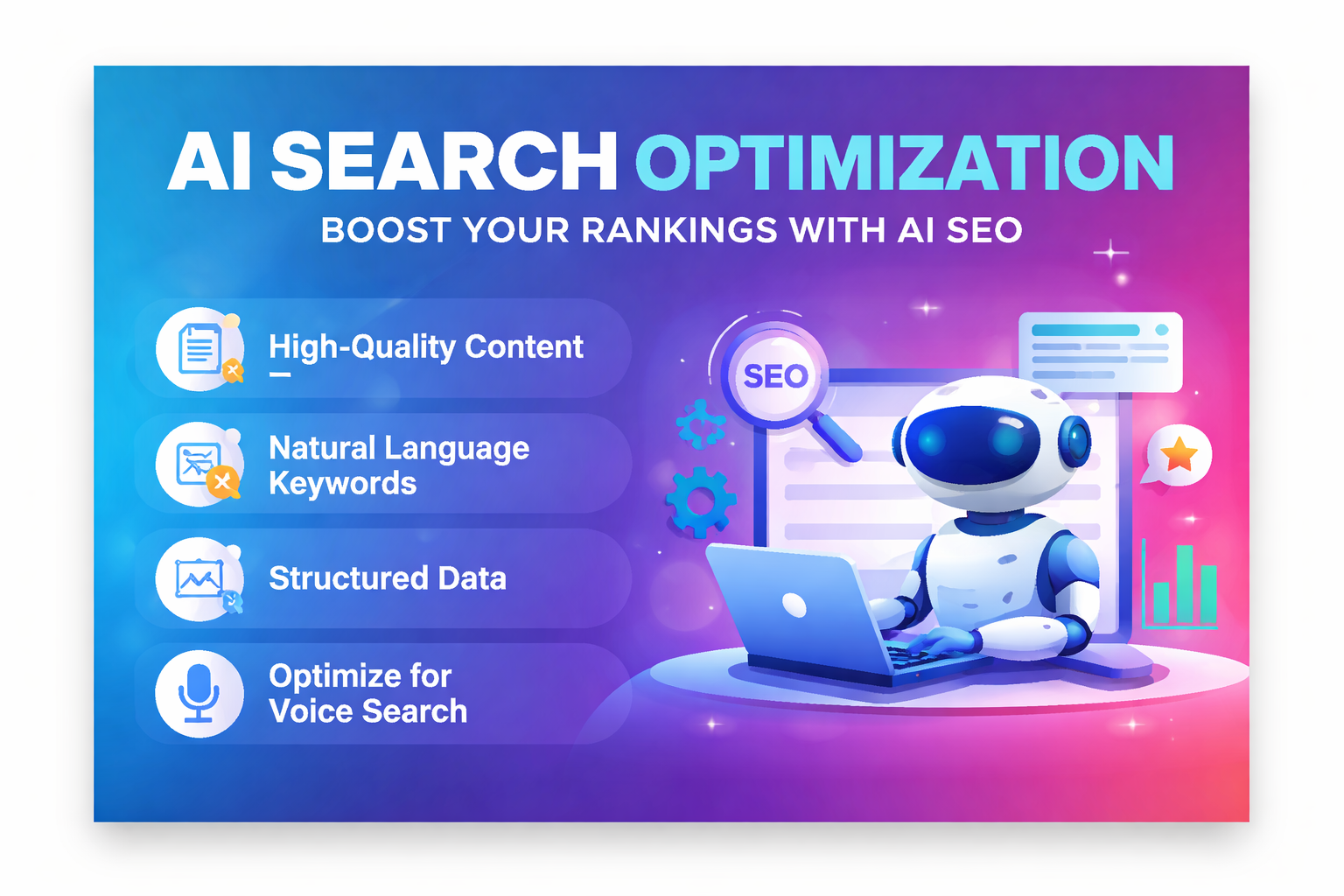
Artificial intelligence is transforming how search engines understand, rank, and deliver content. Traditional SEO techniques are still important, but modern success depends on AI search optimization a smarter, data-driven approach that aligns content with how search engines think.
In this guide, you’ll learn what AI search optimization is, how it works, and practical strategies to help your content rank higher in AI-powered search environments.
What Is AI Search Optimization?
AI search optimization refers to the process of optimizing digital content so artificial intelligence systems can understand, rank, and recommend it effectively.
Unlike traditional SEO, which focused heavily on keywords and backlinks, AI-driven search engines analyze:
- User intent
- Content relevance
- Context and meaning
- Engagement signals
- Content quality
Modern search engines rely on machine learning and natural language processing (NLP) to interpret content more like a human reader.
This means content must be informative, structured, and genuinely helpful.
Why AI Search Optimization Matters Today
AI-powered search engines are evolving rapidly. They no longer rely only on keywords but evaluate how useful your content is to users.
Here’s why AI search optimization is critical:
1. Search Engines Understand Meaning, Not Just Keywords
AI algorithms interpret:
- Context
- Intent
- Topic relationships
Content that answers real questions performs better than keyword-heavy text.
2. Voice and Conversational Search Is Growing
More users search using:
- Voice assistants
- Chat-based search
- Natural language queries
AI search optimization helps content match conversational queries.
3. Competition Is Increasing
With AI-generated content becoming widespread, quality and structure determine visibility.
How AI Search Engines Work
Understanding how AI-powered search systems operate helps you optimize content effectively.
Key Technologies Behind AI Search
Natural Language Processing (NLP)
This allows search engines to:
- Understand sentence meaning
- Detect topic relevance
- Identify semantic relationships
Machine Learning
Search engines learn from:
- User clicks
- Engagement time
- Behavioral patterns
This helps them deliver more accurate results over time.
Semantic Search
Semantic search focuses on meaning, not just keywords.
For example:
Instead of matching exact words, AI understands topic relationships.
Core Elements of AI Search Optimization
To rank well in AI-powered search systems, focus on these essential elements.
1. Create High-Quality, Helpful Content
AI prioritizes content that solves problems.
Focus on:
- Answering specific user questions
- Providing actionable solutions
- Using clear explanations
- Adding examples and insights
Avoid:
- Thin content
- Keyword stuffing
- Generic information
2. Optimize for Search Intent
Understanding user intent is critical.
There are four main types:
- Informational (learning something)
- Navigational (finding a specific page)
- Transactional (buying or signing up)
- Commercial (research before buying)
Match your content with the user’s intent.
3. Use Structured Content Layouts
AI systems prefer organized information.
Use:
- Headings (H1, H2, H3)
- Bullet points
- Numbered lists
- Short paragraphs
Structured content improves readability and ranking potential.
4. Improve Content Depth and Topical Authority
AI rewards content that covers topics thoroughly.
Instead of writing many shallow posts:
Create:
- In-depth guides
- Comprehensive tutorials
- Detailed explanations
Authority builds trust with search systems.
5. Use Smart Keyword Strategies
Keywords still matter but differently.
Use:
- Primary keywords
- Long-tail keywords
- Related topic phrases
- Question-based keywords
In the middle of your strategy, investing in SEO Services to Boost Rankings can help refine keyword placement, improve site structure, and enhance content performance in AI-driven search results.
AI-Friendly Content Writing Techniques
Writing for AI-powered search requires clarity and relevance.
Here are proven techniques.
Write in Natural Language
Avoid robotic keyword repetition.
Use:
- Conversational tone
- Clear sentences
- Human-friendly explanations
AI understands natural language better than forced keyword use.
Answer Questions Clearly
Many AI search systems prioritize:
- Question-based content
- Direct answers
- Step-by-step explanations
Include:
- FAQs
- Problem-solving sections
- How-to guides
Focus on Topic Clusters
Instead of isolated articles:
Create clusters such as:
- Main pillar content
- Supporting articles
- Related subtopics
This improves topical authority.
Technical Optimization for AI Search
Content quality matters but technical factors are also important.
Optimize Page Speed
Fast-loading pages improve:
- User experience
- Engagement time
- Search rankings
Reduce:
- Large images
- Unnecessary scripts
- Server delays
Use Schema Markup
Schema helps AI understand:
- Content type
- Structure
- Context
It improves:
- Search visibility
- Featured results
- Rich snippets
Mobile Optimization Is Essential
Most users search on mobile devices.
Ensure:
- Responsive design
- Readable fonts
- Fast loading
Mobile-friendly content performs better.
AI Search Optimization for Voice Search
Voice search is a major growth area.
Optimize for voice queries by:
- Using conversational keywords
- Answering direct questions
- Writing in natural tone
- Including FAQs
Example voice query:
“How does AI search optimization work?”
Content that answers clearly ranks better.
Common Mistakes to Avoid
Many websites struggle because they follow outdated SEO practices.
Avoid these mistakes:
- Keyword stuffing
- Low-quality AI-generated content
- Ignoring user intent
- Publishing duplicate content
- Writing without structure
Focus on quality over quantity.
The Future of AI Search Optimization
AI search will continue evolving.
Key trends include:
- Personalized search results
- Predictive search suggestions
- AI-generated search summaries
- Increased voice interaction
- Deeper semantic understanding
Websites that adapt early will stay ahead.
Actionable Steps to Start AI Search Optimization
If you’re ready to optimize your content, start with these steps:
- Identify user search intent
- Research semantic keywords
- Create structured content
- Optimize page speed
- Improve content depth
- Add FAQs
- Monitor performance metrics
Consistency is key.
Strong Call-to-Action (CTA)
If you want your content to stay competitive in the era of AI-driven search, now is the time to act. Start auditing your existing content, improve structure, and implement AI-friendly SEO techniques today. The sooner you optimize, the faster you’ll see improved visibility, traffic, and engagement across search platforms.
FAQ: AI Search Optimization
What is AI search optimization?
AI search optimization is the process of improving content so artificial intelligence-powered search engines can understand, rank, and recommend it effectively.
How is AI SEO different from traditional SEO?
Traditional SEO focused heavily on keywords and backlinks. AI SEO focuses more on:
- User intent
- Content quality
- Semantic meaning
- Engagement metrics
Does AI search optimization require technical knowledge?
Not always. Basic content improvements such as better structure, readability, and keyword usage can significantly improve performance.
Can AI-generated content rank well?
Yes, but only if it is:
- High-quality
- Accurate
- Helpful
- Well-structured
Low-quality AI content usually performs poorly.
How long does it take to see results?
Results vary depending on:
- Competition
- Content quality
- Optimization strategy
Most websites see noticeable improvements within 3–6 months.
Final Thoughts
AI search optimization is no longer optional it is essential for modern digital success. By focusing on user intent, structured content, and semantic relevance, you can create content that performs well in today’s intelligent search systems. Implement these strategies consistently, refine your content approach, and stay adaptable to emerging trends. With the right optimization techniques and a strong content strategy, brands like Bees Techs and others can achieve long-term visibility and sustained search growth.